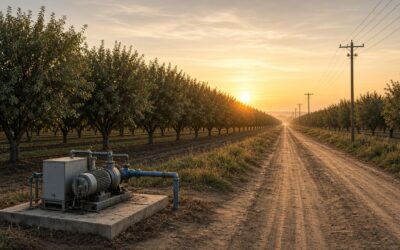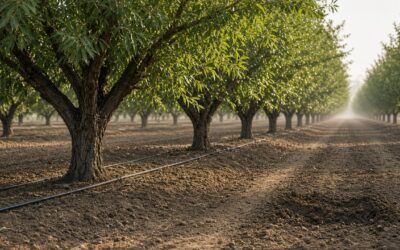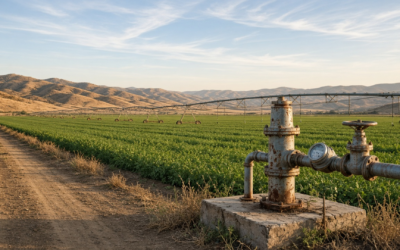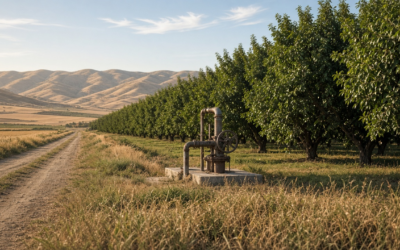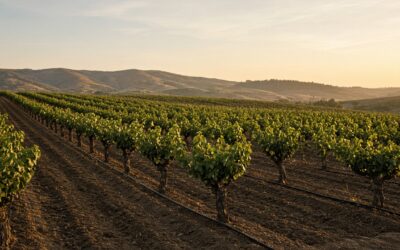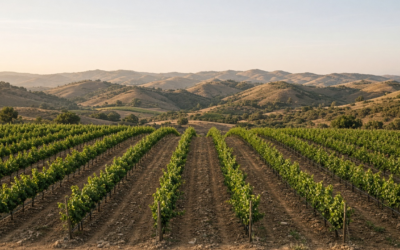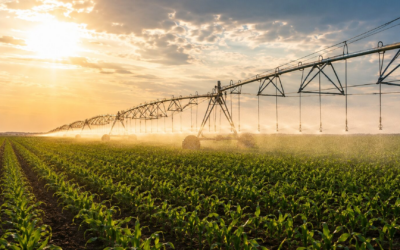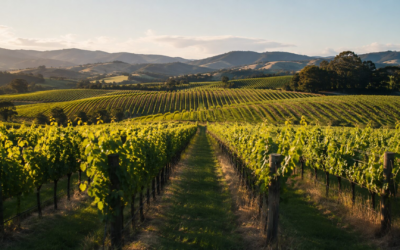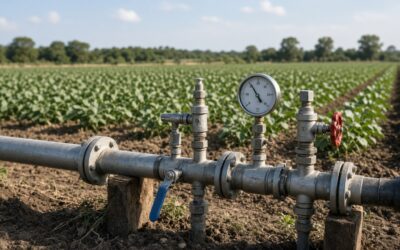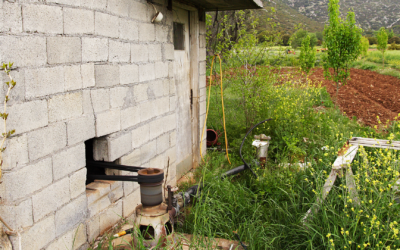
The crop is off the tree. Water is still a next-year decision. Fall irrigation keeps leaves working, stores carbohydrates, and puts moisture in the profile before the first hard freeze.
Remote Irrigation Valve Control: When Driving to the Block Stops Making Sense
Most farms already have valves. The question is who has to stand next to them. Remote irrigation valve control means a supported valve can be opened, closed, or run on a schedule from a phone or a dashboard instead of a truck. It is not a new irrigation method. It is...
Wireless Soil Tensiometers for Farms: What Growers Actually Need
If you search for a tensiometer, the first results are often the wrong tool. Some are lab instruments that measure the surface tension of a liquid. Some are industrial gadgets that measure how hard a cable or bolt is pulling. Neither one tells you whether a vine or a...
Pistachio Irrigation Around Harvest: Finish Kernel Fill Before You Cut Water
Pistachio irrigation around harvest is still Stage 3 for many blocks. Kernel fill drives splits and nut size; early cutoff hits early varieties hardest.
Walnut Irrigation in August and September: Protecting Kernel Fill Before Harvest
Walnut irrigation in August and September is not leftover summer watering. Kernels are still filling, and too much or too little water both show up on the grade sheet.
AgriLynk vs Lumo vs WiseConn for Farm Irrigation Automation
Lumo, WiseConn, and AgriLynk show up in the same irrigation automation searches. They do not do the same first job.
Soil Tension vs Soil Moisture Sensors for Irrigation
A soil moisture monitoring system is only as useful as the question it answers. Tension tells you how hard the plant has to work. Volumetric probes tell you how much water is in the soil.
Post-Harvest Almond Irrigation: Why Trees Need Water After Shake
Post-harvest almond irrigation is easy to postpone during harvest. Trees are still building next year’s flowers. Here’s why water has to come back on, and what to check first.
Vineyard Irrigation Scheduling: How to Manage Different Blocks More Precisely
Why Vineyard Irrigation Scheduling Gets Complicated Vineyard irrigation scheduling is rarely as simple as deciding how many hours to run the pump. One block may show signs of water stress while another still has enough moisture. Soil type, rootstock, canopy size,...
Irrigation System in Hot Weather: Is Yours Keeping Up?
What Can Affect an Irrigation System in Hot Weather? Your irrigation system in hot weather may face very different demands than it did earlier in the season. August heat can increase crop water needs and expose irrigation problems that were harder to notice just a few...
Christmas Tree Irrigation: Protecting Your Long-Term Investment
Why More Christmas Tree Growers Are Rethinking Irrigation At a recent Christmas tree convention, one topic kept coming up: irrigation. Growers who have traditionally relied on rainfall are talking about drilling wells, adding irrigation to new plantings, or expanding...
Why Are My Newly Planted Christmas Trees Drying Out?
Identifying Stress in Newly Planted Christmas Trees If your newly planted Christmas trees are drying out, the problem may become visible quickly. One section of the field may look healthy, while another has browning needles, weak growth, or dry soil around the root...
Almond Tree Water Stress: Causes and Solutions
What Almond Tree Water Stress May Be Telling You Almond tree water stress can appear even while the irrigation system is running. This does not always mean the entire orchard needs more water. Stress can develop when crop demand increases, irrigation does not reach...
Why Is My Irrigation Flow Rate Lower Than Normal?
What a Lower Irrigation Flow Rate May Mean When your irrigation flow rate drops below its normal range, the change may begin anywhere from the water source to the emitters. A clogged filter, restricted valve, pump issue, or changing well conditions can all reduce...
Why Is My Well Water Level Dropping While the Pump Is Running?
What a Dropping Well Water Level May Mean If you notice your well water level dropping while the pump is running, it is understandable to worry that the well is running dry or the groundwater supply is declining. However, a lower water level during pumping is not...
Drip Emitters Clogging: Common Causes and How to Find the Problem
What Drip Emitters Clogging Can Tell YouWhen growers notice drip emitters clogging, the problem may appear limited to one plant, one row, or one section of the field. However, clogged emitters can also signal a larger issue within the irrigation system.Sediment,...
Why Is One Part of My Field Drier Than the Rest?
What Uneven Field Conditions May Be Telling You If one part of my field is drier than the rest, is the irrigation system applying water unevenly, or is something else happening below the surface? A dry area may point to an irrigation problem, but it can also be caused...
Low Irrigation Pressure: Common Causes and How to Find the Problem
Why Low Irrigation Pressure Matters Quick Takeaways Low irrigation pressure is commonly caused by leaks, clogged filters, partially closed valves, pump issues, or excessive system demand. Looking at pressure and flow together often makes troubleshooting easier than...
Your Farm Story Should Come From You, Not Assumptions
Why Your Farm Story Matters Every farm has a story. It shows up in early mornings, changing weather, irrigation decisions, labor challenges, and rising costs. It also shows up in the way growers adjust when field conditions change. From the outside, that full picture...
Why Growers Need A Stronger Voice In Agriculture Conversations
Why Grower Voice In Agriculture Matters Agriculture is being discussed more often by people outside the farm. Water use, sustainability, regulations, labor, land use, and food production are all becoming bigger conversations. That is why grower voice in agriculture...