
STOCK TANK MONITORING
Remote stock tank monitoring for livestock water
AgriLynk helps you monitor remote tanks and water points so your team can respond before an empty tank becomes an animal health problem or an emergency trip.
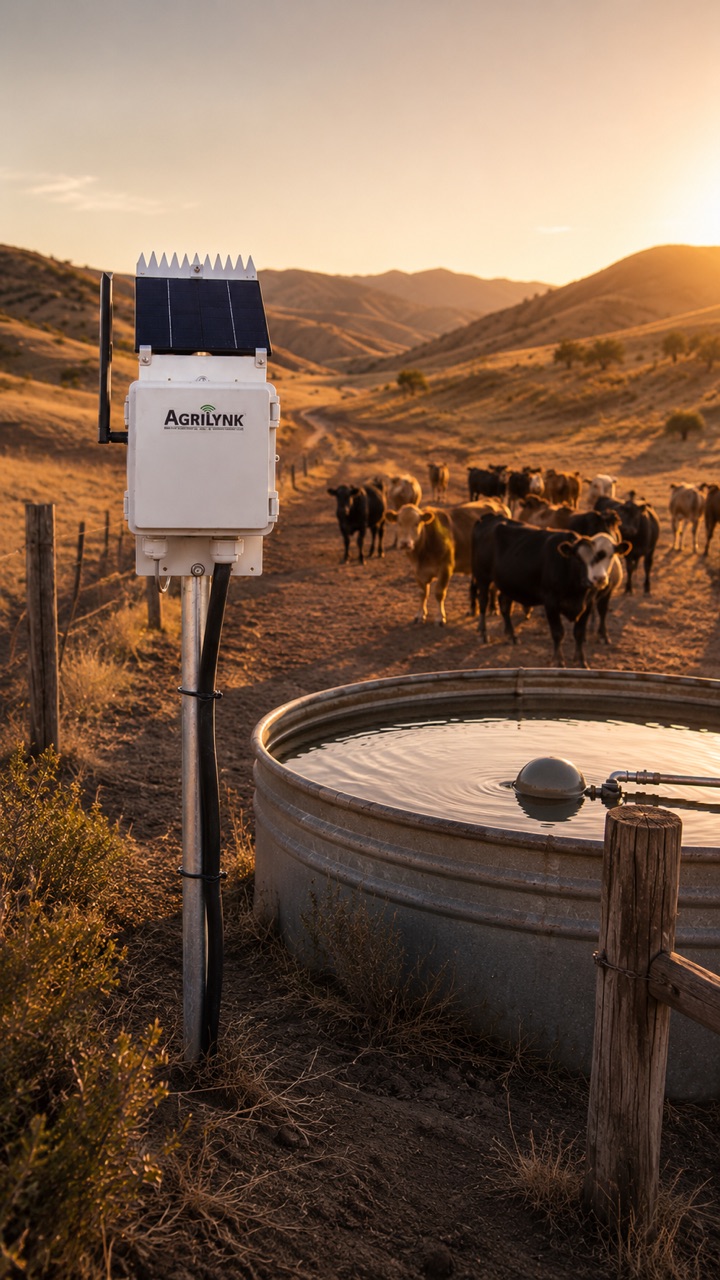
LESS GUESSWORK
Remote water visibility for livestock operations.
Checking tanks takes time, fuel, and labor. AgriLynk gives your team a practical way to keep eyes on remote water points and focus trips where they are actually needed.
Monitor tank levels
Track supported tank and water-point conditions remotely from the dashboard.
Get alerts sooner
Know when a water point needs attention before the situation becomes urgent.
Prioritize trips
Use clear data to decide where a hand needs to go first.
BUILT FOR REAL CONDITIONS
A practical fit for remote pastures and scattered water points.
Stock tank monitoring can be used as a focused livestock solution or as part of a larger AgriLynk farm network alongside wells, pumps, reservoirs, weather, and irrigation systems.
Remote locations
Designed for places where daily checking is expensive or impractical.
Modular growth
Start with priority tanks and expand station by station.
Clear dashboard
Give your team a simple view of what needs attention.
CONNECTIVITY OPTIONS
Connect one remote water point or many across the operation.
Standalone cellular field stations can monitor isolated stock tanks without a separate farm gateway. For several nearby water points, a shared gateway can support a wider LoRa field network.
Standalone cellular field station
Give an isolated pasture or widely separated tank its own direct cloud connection.
- Direct field-to-cloud connection
- No farm gateway required
- Best for one site or widely separated locations
Shared-gateway field network
Connect multiple tanks, wells, pumps, and other stations through one shared communication backbone.
- Many field stations can share one gateway
- Private long-range field network
- Best for denser multi-station layouts
NEXT STEP
Show us your water points.
Tell us how many tanks you need to monitor, how far apart they are, and what power or communication constraints exist. We will help you choose a practical starting point.