
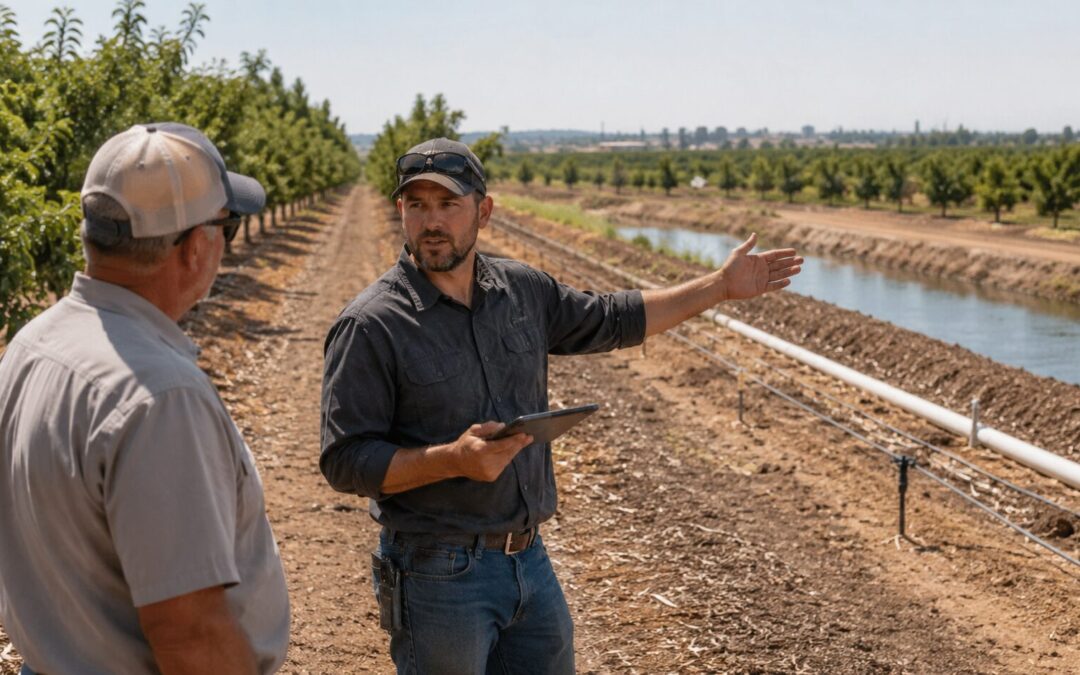
Why Grower Voice In Agriculture Matters
Agriculture is being discussed more often by people outside the farm. Water use, sustainability, regulations, labor, land use, and food production are all becoming bigger conversations. That is why grower voice in agriculture matters more than ever.
These conversations affect growers directly, but growers are not always the ones leading them. Decisions and opinions are often formed by people who may not fully understand what it takes to manage a farm day after day.
Growers are the ones balancing crop needs, water availability, labor challenges, equipment problems, rising costs, and changing weather conditions. Their experience needs to be part of the conversation from the beginning.
Agriculture Decisions Are Not Simple From The Field
From the outside, farm decisions can look simple. Use less water. Follow the new rule. Change the schedule. Adjust the practice.
But real farm conditions are rarely that straightforward.
A grower may be managing different soil types, crop stages, irrigation systems, pump limitations, and labor availability across multiple fields. One block may need water while another does not. One field may respond quickly to irrigation while another takes more time.
These details matter because farming decisions are not made in theory. They are made in real conditions, with real consequences.
Outside Conversations Still Affect Growers
Even when growers are not in the room, the conversations still reach them.
Discussions around water can affect availability, reporting, and long-term planning. Sustainability conversations can influence buyer expectations, certification requirements, and public perception. Regulations can change what growers need to track, document, or adjust in their operations.
Labor and land use conversations also have a direct impact on farms. They can affect how work gets done, how land is managed, and what options growers have in the future.
These issues are not separate from the farm. They shape how growers operate every day.
Why Grower Input Is Essential
Growers bring real-world experience that cannot be replaced by outside assumptions.
They understand where the pressure points are. They know which practices are realistic, which systems create challenges, and which ideas sound good on paper but are difficult to carry out in the field.
Grower input can help decision-makers better understand:
- What is actually happening in the field
- What challenges growers are already working through
- What resources are needed to make improvements
- How new rules or expectations may affect daily operations
- Which solutions are practical for real farms
Without grower input, agriculture conversations can become disconnected from the people and operations they affect most.
Real Farm Conditions Need To Be Part Of The Story
One of the biggest challenges in agriculture is that the full story is not always visible from the outside.
People may see irrigation happening, but they may not see the soil conditions, crop stage, weather pressure, pump limitations, or scheduling decisions behind that irrigation event.
They may hear about water use, but not see the steps many growers are already taking to improve efficiency. They may see a regulation as a simple requirement, while the grower sees the time, cost, paperwork, and operational changes needed to comply.
That is why real farm conditions need to be part of the story.
Growers should be able to explain what they are facing, what they are already doing, and what they need in order to keep improving.
How Better Visibility Supports A Stronger Grower Voice
A stronger grower voice starts with clarity.
When growers have better visibility into their operation, they are in a stronger position to make decisions, explain challenges, and communicate priorities.
Field data, irrigation activity, soil moisture trends, water use, and system performance can all help growers better understand what is happening across their operation. That information can also help them explain their decisions with more confidence.
This does not replace grower experience. It supports it.
Growers already know their land, crops, and systems. Better visibility simply gives them another way to document and communicate what they are seeing every day.
How AgriLynk Supports Growers
AgriLynk supports the idea that growers should be able to make decisions and tell their story from a place of clarity.
Better visibility into an operation can help growers communicate what is actually happening in the field, rather than relying on assumptions from outside voices.
When growers can see field conditions more clearly, they can make more informed decisions and have better conversations about water, efficiency, sustainability, and resource management.
That clarity matters.
It gives growers a stronger foundation when agriculture conversations turn toward regulation, conservation, production, or long-term planning.
Final Thoughts
Agriculture conversations are not going away. Water, sustainability, labor, land use, and regulations will continue to shape the future of farming.
That makes grower involvement even more important.
Growers need to be part of these conversations before decisions are made, not just after they are put into action. Their experience, challenges, priorities, and knowledge should help shape the path forward.
When growers have clearer information, they have a stronger voice.
And agriculture needs that voice now more than ever.