
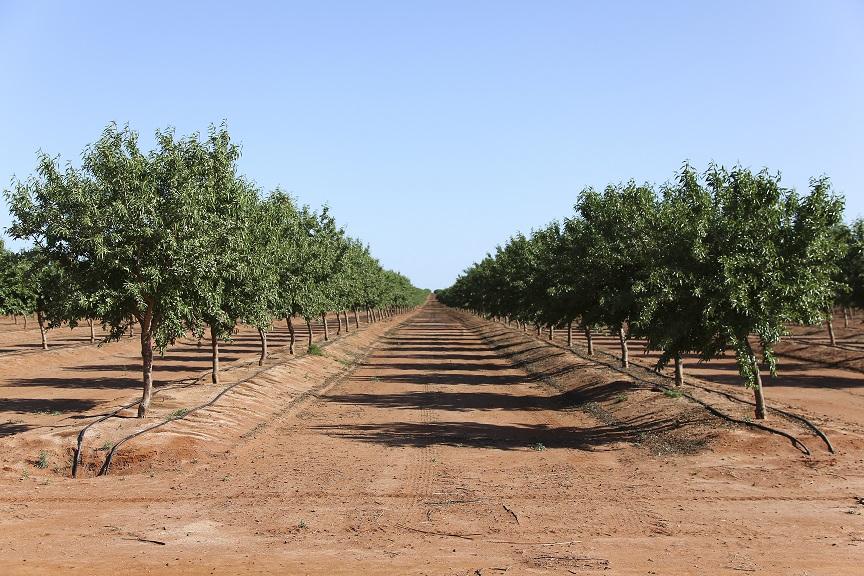
What Almond Tree Water Stress May Be Telling You
Almond tree water stress can appear even while the irrigation system is running. This does not always mean the entire orchard needs more water. Stress can develop when crop demand increases, irrigation does not reach the full root zone, water is applied unevenly, or soil conditions limit uptake.
The key is determining whether the orchard needs more water or whether the water already being applied is not reaching the trees as intended.
Quick Takeaways
- Water stress does not always mean the entire orchard needs a longer irrigation set.
- Hull split, harvest, and postharvest recovery create different irrigation challenges.
- Clogged emitters, pressure changes, soil variation, and salinity can contribute to stress.
- Monitoring soil moisture at multiple depths can show whether irrigation is reaching the root zone.
- Flow, pressure, and tree-response data can help separate crop demand from system problems.
What Causes Almond Tree Water Stress?
The Root Zone Was Already Too Dry
Low-volume drip and microsprinkler systems apply water gradually. If irrigation begins after the soil profile is already depleted, the surface may become wet while deeper portions of the root zone remain dry.
The orchard may appear irrigated even though the trees still have limited access to water.
Irrigation Is Not Reaching the Full Root Zone
Almond roots draw moisture from different parts of the soil profile.
Short irrigation cycles may wet only the upper soil, while excessive runtimes can move water and nutrients below the active root zone. Monitoring at multiple depths helps show how far the water is moving.
Crop Water Demand Has Increased
Heat, wind, canopy size, crop load, and growth stage can increase how quickly the orchard uses moisture.
A schedule that worked earlier in the season may not keep pace during higher-demand periods. Before adding runtime, growers should confirm that the system is delivering water normally and see how quickly the root zone is drying.
Hull Split and Harvest Are Difficult to Balance
Around hull split, growers may be balancing kernel development, hull rot risk, orchard-floor preparation, and harvest timing.
Some growers use controlled deficit irrigation during early hull split, but the goal is moderate, managed stress rather than severe moisture depletion. Root-zone data can help show whether conditions are responding as intended.
The Orchard Has Not Recovered After Harvest
Almond irrigation concerns continue after harvest.
Trees still need enough moisture to support leaves, roots, and the development of next season’s buds. Postharvest needs can vary by variety, harvest timing, weather, and remaining soil moisture.
Water Is Being Applied Unevenly
Emitters and microsprinklers can continue operating while applying less water than intended.
Mineral buildup, debris, roots, damage, or pressure differences can reduce output. Low flow may point to a clogged filter, valve, or pump concern, while high flow may indicate a leak or broken line.
Soil Conditions Are Limiting Water Availability
Sandy soils may drain quickly, while heavier soils hold moisture longer. Compaction, shallow soil, hardpan, and poor infiltration can also cause parts of the orchard to respond differently.
Salinity creates another challenge. Moisture may be present, but accumulated salts can make it harder for roots to take up water.
What Almond Growers Should Check First
Start by determining whether the stress affects the entire orchard or is concentrated in a particular row, block, variety, soil type, or irrigation set.
Inspect filters, valves, lines, emitters, and microsprinklers for restrictions, leaks, or damage. Confirm that the correct sets are operating for the intended runtime.
Compare pressure at the beginning and end of the line, and review flow during irrigation. Then check soil moisture at multiple depths to see whether water is reaching the intended root zone.
Why the Soil Surface Does Not Tell the Whole Story
The surface may look dry because of heat and evaporation while moisture remains deeper in the soil. In other cases, a visible wet area may not mean water has reached enough of the root zone.
Monitoring multiple depths gives growers a clearer view of how the orchard responds before, during, and after irrigation.
Looking at the Full Pattern
No single measurement can explain every case of almond tree water stress.
| What You Observe | What It May Suggest |
|---|---|
| Upper soil wets, but deeper soil stays dry | Irrigation is not reaching the full root zone |
| All depths dry quickly | High crop demand, limited wetted area, or insufficient irrigation |
| One block dries faster | Pressure, emitter, soil, root, or variety differences |
| Low pressure and low flow | Filter, valve, pump, or system restriction |
| Low pressure and high flow | Leak or broken irrigation component |
| Deep soil stays wet | Irrigation may be too long or too frequent |
| Moist soil with continued tree stress | Salinity, root health, disease, or limited oxygen |
| Stress increases around hull split or harvest | Irrigation timing, deficit management, or harvest preparation |
| Stress continues after harvest | Depleted moisture or insufficient recovery irrigation |
| Tree response changes while soil moisture remains stable | Rising crop demand or another plant-level stress may be involved |
These patterns do not provide a final diagnosis, but they can help growers decide where to investigate.
How AgriLynk Helps
AgriLynk helps almond growers see what is happening within the irrigation system and below the soil surface.
Soil moisture sensors at multiple depths can show how irrigation moves through the root zone and how quickly moisture is used between cycles. Monitoring multiple locations can reveal whether certain blocks, varieties, or soil types are responding differently.
Flow and pressure monitoring can also show whether the irrigation system is operating within its normal range.
Depending on the model and output type, an existing dendrometer may also be able to integrate with the AgriLynk system. This can allow growers to compare changes in tree response with soil moisture, irrigation timing, flow, and pressure data in one dashboard.
Together, these measurements can provide a more complete picture of whether stress is related to available soil moisture, irrigation system performance, crop demand, or a combination of factors.
Find the Cause Before Adding More Water
When almond trees show water stress, extending the irrigation set may seem like the safest response.
But more water will not correct a clogged emitter, pressure problem, damaged line, salinity concern, or uneven soil condition. It may only move water below the root zone or leave other areas wetter than necessary.
By comparing soil moisture, flow, pressure, crop stage, and tree response, growers can better determine whether the concern is crop demand, irrigation performance, root-zone conditions, or a combination of factors.