
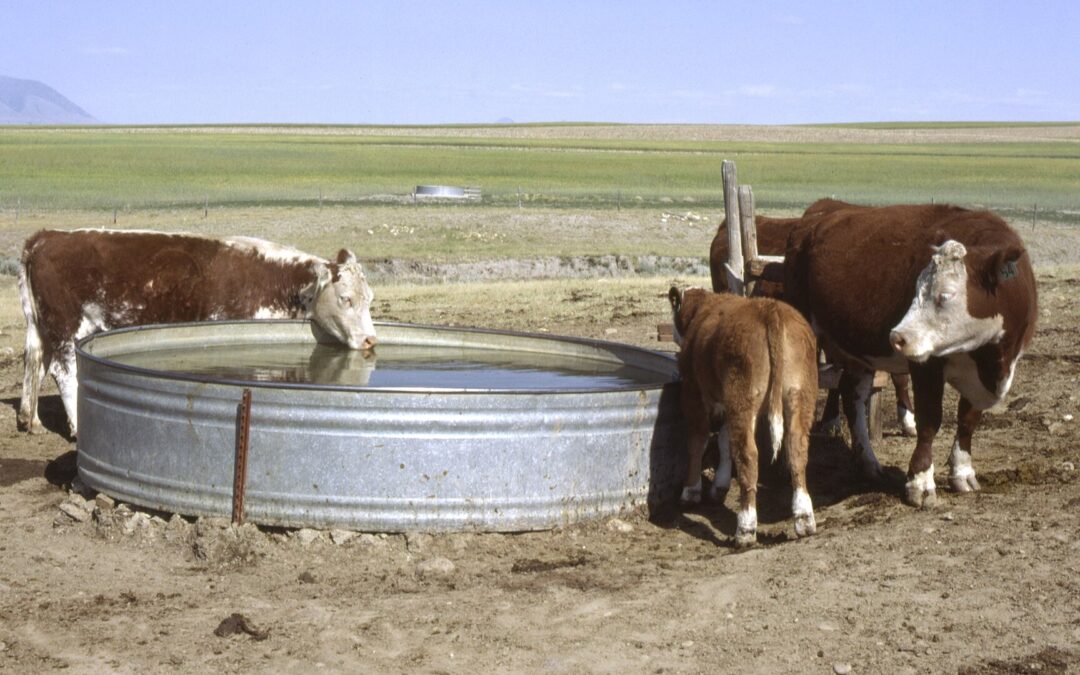
A full tank at sunrise does not guarantee water at dusk. Float valves stick. Lines freeze or clog. Pumps quit. Cattle tip or thrash a trough. A leak drains overnight. On a remote pasture, the first notice is often animals bunched at an empty rim—or worse, animals already looking for water through a fence.
This post is about why dry-ups go unnoticed, what is at stake for livestock, what to check when a tank fails, and how remote level alerts change the daily math. It supports the practical product path on AgriLynk’s remote stock tank monitoring page.
Quick Takeaways
- Dry tanks are usually a supply or hardware failure, not a surprise that cattle “drank the pasture dry” in one afternoon—though heavy use can empty a marginal tank fast in heat.
- SDSU Extension notes producers may spend over $1,500 a year on fuel just checking water, and that lack of water can mean escapes, poor performance, or death with losses that climb quickly.
- Alerts do not replace a ranch hand. They decide which tank needs a trip today.
Why tanks empty between checks
Most operations already know the failure list. The problem is frequency and distance.
| Failure mode | What it looks like | Why it hides |
|---|---|---|
| Stuck or failed float / inlet valve | Tank drops and never refills | Looks fine until the reserve is gone |
| Well, pump, or power loss at the fill source | Level falls steadily during use | Source is often farther than the tank |
| Frozen water or iced surface | Animals cannot drink even if depth looks OK | Common in cold snaps between morning checks |
| Leak, tip, or damaged trough | Sudden drop or muddy ring | May not show until the next drive-by |
| Clogged line or plugged orifice | Slow refill that cannot keep up with demand | Especially bad in heat and peak grazing |
| Overload from more animals than the tank was sized for | Gradual empty by afternoon | Easy to miss if you only check at dawn |
South Dakota State University Extension’s livestock water-monitoring article is direct: checking remote tanks can take hours and real fuel, and equipment failure or ice can cut animals off from water even when someone is doing their best.
University of Nebraska–Lincoln BeefWatch (2024) makes the same labor point: water checks can eat a large share of time when sources are few and far between, which is why ranchers look at cameras, dedicated tank monitors, and integrated sensors.
Livestock risk is not theoretical
Water is not optional management. When a tank fails:
- Animals concentrate at the dry site, then push fences looking for another source
- Intake drops, performance drops, and heat stress gets worse fast
- In severe cases, dehydration and death create losses that dwarf the cost of a monitor—SDSU frames those outcomes in the “tens of thousands of dollars” range for serious events
You do not need a horror story to justify better visibility. You need fewer surprises on the pastures you cannot see from the house.
What to check when a tank is low or dry
Use this as a field card. Fix what you find; do not stop at “add water.”
1. Confirm animals can physically drink — ice, mud depth, tipped tank, debris. 2. Look at the inlet — float position, valve stuck shut/open, visible leak at the fitting. 3. Trace supply — well/pump power, pressure, broken poly, shutoff left closed. 4. Check for leaks — wet ring, unexplained muddy fan, sudden overnight drop with low animal use. 5. Count demand — more head moved onto the pasture than the tank and fill rate can support. 6. Note the timeline — empty this morning after full yesterday is a different problem than a slow week-long decline.
If you only haul water and leave, the same failure often repeats within days.
What remote alerts actually change
A level sensor does not herd cattle. It answers a simpler question: is this water point still OK?
Useful alert behavior:
- Low-level threshold with enough reserve to drive out before animals are out of water
- Sudden drop alerts that catch tips and major leaks
- Dashboard history so you can see whether a tank is trending down across hot afternoons
- Fewer “all tanks every day” routes; more “this one needs a person”
SDSU’s adoption notes still apply: connectivity, subscription cost, and mounting where cattle cannot rub equipment to death matter as much as the sensor itself. UNL’s roundup of cameras vs dedicated monitors vs integrated systems is useful when you are choosing a style—visual confirmation vs measured depth vs a wider livestock platform.
AgriLynk’s livestock path is measured tank/water-point conditions with alerts and a shared dashboard, using standalone cellular for isolated pastures or a shared-gateway network when several nearby water points can share infrastructure. Start with the tanks that hurt most when they fail.
How AgriLynk Helps
AgriLynk remote stock tank monitoring is built for remote pastures and scattered water points: track supported tank levels, get alerts sooner, and prioritize trips. Expand station by station—or fold tanks into a wider farm network with wells and irrigation later.
Next step: Tell us how many tanks you need to see, how far apart they are, and what power or coverage looks like on those pastures. Contact AgriLynk or call (760) 723-1529.
Sources
- South Dakota State University Extension, Water Monitoring Systems for Livestock (Logan Vandermark, Hector Menendez, Jameson Brennan).
- University of Nebraska–Lincoln BeefWatch, Using technology to monitor water on the ranch (Thomas Aquino, Yijie Xiong, March 27, 2024).
- AgriLynk product page: Remote stock tank monitoring for livestock