
Why More Christmas Tree Growers Are Rethinking Irrigation
At a recent Christmas tree convention, one topic kept coming up: irrigation.
Growers who have traditionally relied on rainfall are talking about drilling wells, adding irrigation to new plantings, or expanding systems they already have.
After another summer of high temperatures and dry conditions, the conversation is changing.
For Christmas tree growers, irrigation is not just about getting trees through one hot summer. A Christmas tree can take years to reach harvest, which means every new planting represents a long-term investment in land, labor, materials, and time.
Protecting that investment starts during the first few years.
Why Is Irrigation Becoming a Bigger Conversation?
For farms that have successfully grown Christmas trees without irrigation, adding a well, pump, mainline, or drip system is a significant decision.
But growers are also looking more closely at the risk of not having water available when young trees need it most.
Michigan State University Extension reported in 2026 that 32% of surveyed Michigan Christmas tree growers planned to start or expand irrigation. Research has also shown the value of irrigation in helping newly established trees through drought conditions.
The question is shifting from what will irrigation cost to what could it cost if water is not available when the crop needs it?
Why Are the First Few Years So Important?
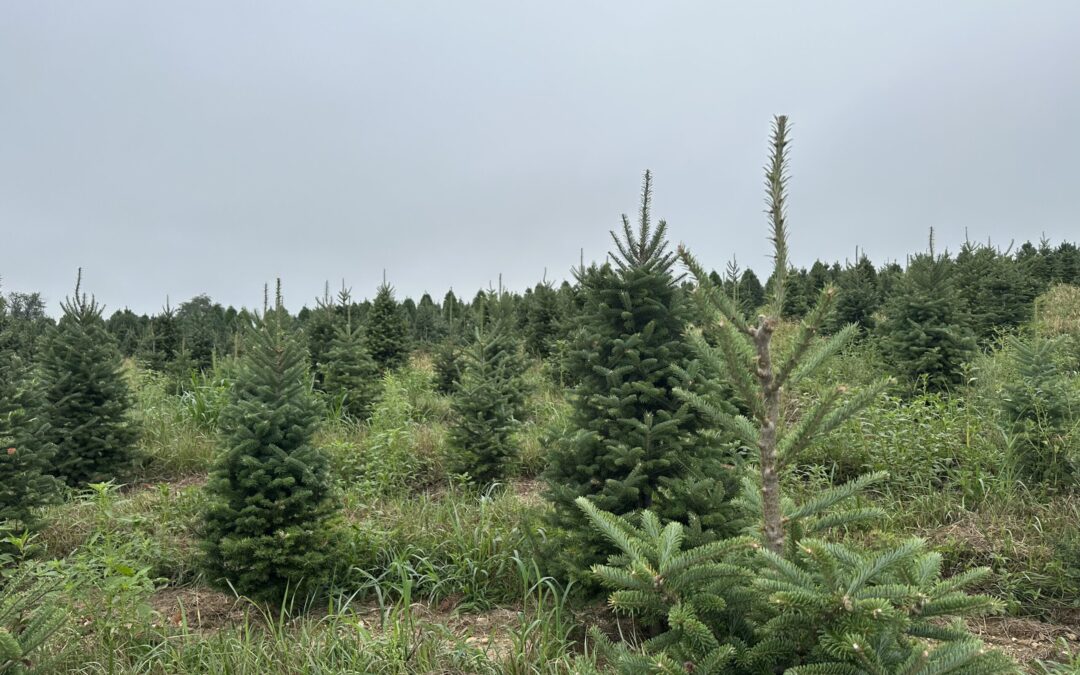
Newly planted Christmas trees have limited root systems and are less able to tolerate extended dry periods than established trees.
During the first few years, roots are still expanding into the surrounding soil. When high temperatures and drought arrive during this stage, young trees have less margin for error.
Losing a tree also costs more than the price of the seedling.
There is planting labor, site preparation, weed management, fertilizer, equipment time, and the years required to grow the replacement.
On a crop with a long production cycle, a loss during establishment can affect the block far beyond one season.
Is Irrigation Becoming Part of Protecting the Crop?
For some growers, adding irrigation may mean drilling a well, installing a pump, adding filtration, running mainlines, or setting up drip irrigation.
That is a significant investment.
But it is infrastructure that may serve the farm through multiple planting cycles, not just one dry summer.
When growers evaluate irrigation, it can be helpful to consider both sides of the equation: the cost of installing the system and the value of the crop that system is helping protect.
Installing Irrigation Is Only the First Step
Having irrigation available does not automatically mean every tree is receiving the water intended.
Pressure can change. Emitters can plug. Lines can leak. Soil conditions can vary across a block.
The important question is not simply whether the irrigation system turned on. It is: did the water reach the trees that needed it? That is where monitoring becomes valuable.
How AgriLynk Helps
AgriLynk gives growers remote visibility into the irrigation systems and water sources they are relying on.
Depending on the farm, growers can monitor:
- Well conditions
- Irrigation flow
- System pressure
- Soil moisture
Together, these measurements can help answer whether water is available, whether the irrigation system is operating as expected, and whether moisture is reaching the root zone.
The goal is not to replace field experience. It is to give growers more information about what is happening between trips through the farm.
Protect the Years You Are Putting Into the Crop
Christmas tree growers make decisions today for a crop they may not harvest for years.
That is what makes the establishment period so important.
For some farms, hotter and drier summers are changing the calculation around irrigation. A well, irrigation system, or better monitoring may require an investment today, but the crop it is protecting represents years of future production.
When it takes years to grow a Christmas tree, protecting the first few years can help protect the investment that follows.