
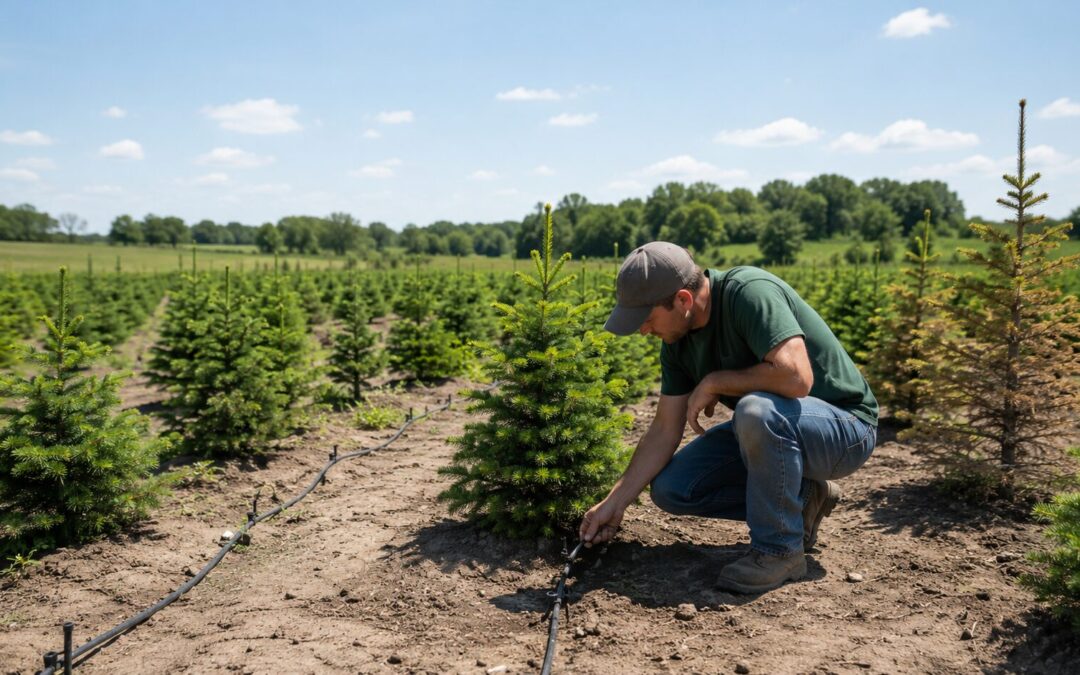
Identifying Stress in Newly Planted Christmas Trees
If your newly planted Christmas trees are drying out, the problem may become visible quickly. One section of the field may look healthy, while another has browning needles, weak growth, or dry soil around the root zone.
The cause is not always simply a lack of water. Young trees can struggle because of uneven irrigation, shallow watering, poor soil contact, drainage differences, or equipment problems.
Understanding what is happening below the soil surface can help you correct the issue before trees are permanently damaged.
Quick Takeaways
- Young trees have limited root systems and dry out faster than established trees.
- Soil may look wet at the surface while remaining dry near the roots.
- Plugged emitters, leaks, pressure changes, and elevation can create uneven watering.
- Both overwatering and underwatering can stress young trees.
- Monitoring soil moisture, pressure, and flow can help identify problems sooner.
Why Are Newly Planted Christmas Trees Drying Out?
Established trees can draw moisture from a larger area of soil. Newly planted seedlings and transplants cannot.
Their roots are concentrated in a small area, so the root zone can dry quickly during hot, windy, or dry conditions. The tree may also experience transplant stress while its roots begin growing into the surrounding soil.
Consistent moisture is important during this period. Large swings between wet and dry soil can make it harder for the tree to recover and produce healthy growth.
Is Water Reaching the Root Zone?
A wet soil surface does not always mean water is reaching the roots.
Short irrigation cycles, compacted soil, or poor infiltration can prevent moisture from moving deeply enough. After irrigation, check the soil near several trees at root depth.
Compare different parts of the field, including:
- Higher and lower elevations
- The beginning and end of irrigation lines
- Sandy and heavier soil areas
- Healthy and stressed sections
This can help determine whether the problem affects the entire planting or only certain zones.
Could an Irrigation Line Be Plugged?
A plugged emitter, kinked line, closed valve, or pressure problem can reduce the amount of water reaching a tree or row.
Inspect the system while it is running. Look for weak output, dry areas, leaks, damaged tubing, and emitters that are not flowing.
Be sure to check the far ends of irrigation lines, especially on sloped or irregular ground. The system may appear to be working near the valve while trees farther away receive less water.
Is the Field Being Watered Evenly?
Christmas tree fields often vary in elevation, soil type, drainage, sun exposure, and wind.
Sandy areas may dry faster than heavier soils. Trees at the top of a slope may receive different pressure than those at the bottom. Low areas may remain wet longer and develop drainage problems.
Monitoring representative areas can help growers adjust irrigation based on actual field conditions rather than using one schedule for the entire field.
Could the Trees Be Getting Too Much Water?
Browning or stressed trees are often assumed to need more water, but overwatering can cause similar symptoms.
When soil stays saturated, roots may not receive enough oxygen. Poor drainage can also make it difficult for roots to grow beyond the original root ball.
Check for standing water or soil that remains wet long after irrigation. Pay close attention to low areas, compacted sections, and heavier soils.
The goal is to maintain moisture in the root zone without keeping the soil constantly saturated.
Other Reasons Young Trees May Struggle
Irrigation may not be the only factor. Newly planted Christmas trees can also be affected by:
- Poor root-to-soil contact
- Incorrect planting depth
- Root damage
- Weed competition
- Heat or wind exposure
- Animal, insect, or disease damage
- Differences in transplant quality
Comparing stressed trees with nearby healthy trees can often reveal useful differences.
How AgriLynk Helps
Finding irrigation problems manually can require repeated trips across the field.
AgriLynk helps growers remotely monitor soil moisture, irrigation pressure, and flow. This makes it easier to identify dry areas, pressure changes, missed irrigation events, and differences between zones.
With better visibility, Christmas tree growers can respond sooner, reduce unnecessary field checks, and make irrigation decisions using real field data.
Remote monitoring does not replace field inspections, but it can help growers know where to look first.
What Should I Check First?
When newly planted Christmas trees begin drying out:
- Check soil moisture at root depth.
- Compare healthy and stressed areas.
- Confirm that emitters and irrigation lines are working.
- Look for leaks, plugged components, or pressure differences.
- Check for standing water or poor drainage.
- Inspect planting depth, roots, weeds, and signs of damage.
The sooner the problem is identified, the better the chance the trees can recover.
Protect Young Trees With Better Irrigation Visibility
Newly planted Christmas trees need consistent moisture while their roots become established. When irrigation is uneven or difficult to verify, small problems can lead to tree loss, inconsistent growth, and extra labor.
AgriLynk gives growers better visibility into field conditions, helping them spend less time checking irrigation manually and more time protecting their crop.
Want to know what is happening in your Christmas tree field without checking every irrigation zone in person? Contact AgriLynk to learn how remote irrigation monitoring and automation can support your operation.