
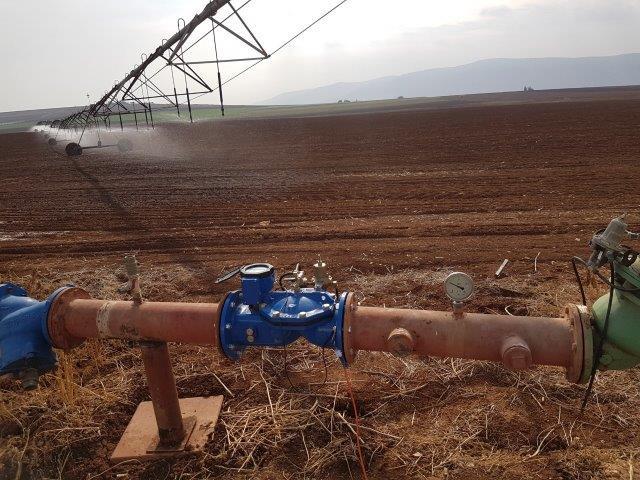
What a Lower Irrigation Flow Rate May Mean
When your irrigation flow rate drops below its normal range, the change may begin anywhere from the water source to the emitters. A clogged filter, restricted valve, pump issue, or changing well conditions can all reduce flow, so identifying the pattern is often more useful than reacting to a single reading.
You may notice weaker output, longer irrigation times, or areas of the field that are not receiving enough water.
A lower irrigation flow rate does not automatically mean the pump is failing. The more useful questions are when the flow changed, whether it continued to fall, and whether pressure changed at the same time.
Irrigation Flow Rate, Pressure and Normal System Performance
Flow rate measures how much water moves through an irrigation system during a specific amount of time. It may be measured in gallons per minute, gallons per hour, or another unit depending on the system.
Pressure measures the force moving that water through the system.
Flow and pressure are connected, but they do not measure the same thing. A system can experience low flow, low pressure, or both.
Every irrigation zone should have a relatively consistent operating range when the same equipment is running under similar conditions. When flow falls outside that normal range, something within the water source, pump, filter, pipeline, valves or irrigation outlets may have changed.
Why Is My Irrigation Flow Rate Lower Than Normal?
Several factors can reduce irrigation flow.
Clogged or Restricted Filters
Filters collect sand, sediment, and other material before it reaches the rest of the irrigation system.
As that material builds up, it becomes more difficult for water to pass through. A partially clogged filter may allow the system to continue operating while gradually reducing the amount of water reaching the field.
Checking pressure before and after the filter can help identify whether it is creating a restriction.
Valves That Are Not Opening Completely
A valve does not have to be fully closed to affect irrigation flow.
Debris, a damaged diaphragm, an electrical problem, or normal wear may prevent a valve from opening completely. A manually operated valve may also have been left partially closed.
When the problem only affects one zone, the valve controlling that area is a logical place to begin troubleshooting.
Restrictions Within the Pipeline
Sediment, mineral buildup, roots, damaged pipe, or other obstructions can restrict water movement.
These problems may develop slowly. The system can continue running, but the flow rate may gradually decline over multiple irrigation cycles.
A sudden change may be easier to notice, while a gradual decline is more likely to be missed without a consistent operating baseline.
Clogged Emitters or Irrigation Outlets
When drip emitters or other irrigation outlets become clogged, less water is released into the field.
Partial clogging can be difficult to identify because water may still be visible at the emitter. However, it may be delivering less water than intended.
If many emitters are affected, the total flow for the irrigation zone may fall. Clogging can also create uneven water distribution, causing some areas to dry faster than others.
Reduced Pump Performance
A lower flow rate may begin at the pump.
Worn components, intake restrictions, air entering the system, electrical problems, or changes in pump speed can reduce the amount of water being produced.
The pump may continue operating even when it is no longer delivering its normal output. Changes in pressure, energy use, operating sound, or irrigation duration may provide additional clues.
Changes in the Water Source
For a system supplied by a well, irrigation flow may change when the pumping water level drops.
As the water level falls, the pump may have to lift water from a greater depth. Depending on the pump and well conditions, this can affect flow and pressure.
Surface water supplies, reservoirs, and storage tanks may also experience changing intake conditions. Debris around an intake or a lower water level can restrict the amount of water entering the system.
Does Low Flow Mean the Pump Is Failing?
Not necessarily. A single low reading may be caused by the zone being operated differently, a partially closed valve, a dirty filter, or a temporary change in the water source.
A pump problem may be more likely when multiple zones experience lower flow, pressure also declines, or the system takes longer to deliver the same amount of water.
A restriction within one zone may be more likely when the rest of the system continues operating normally.
These patterns cannot provide a complete diagnosis, but they can help determine where to begin inspecting the system and when a pump or irrigation professional may be needed.
Why One Flow Measurement Is Not Enough
A single reading only shows what was happening at one moment.
One measurement may be taken shortly after startup, while another may be taken after the system has been running for several hours. The number of active zones, filter condition, and water-source level may also be different.
Tracking flow over time helps answer more useful questions:
- What is the normal flow rate for each zone?
- Did the change happen suddenly or gradually?
- Does flow continue falling while the system runs?
- Is the problem affecting one zone or the entire system?
- Did pressure change at the same time?
- Is the system taking longer to irrigate the same area?
The pattern is usually more informative than any individual reading.
How AgriLynk Flow Monitoring Helps
AgriLynk flow monitoring allows growers to compare irrigation flow across multiple watering cycles.
This creates a clearer picture of the system’s normal operating range. Over time, growers can identify patterns such as gradual flow loss, sudden changes or differences between irrigation zones.
Viewing flow alongside pressure, well level and soil moisture can provide additional context. It may help show whether a change begins at the water source, within the irrigation system or in the field.
Flow monitoring does not replace routine maintenance or a professional system inspection. It can, however, provide valuable information before a problem becomes more severe and give growers better data to share with irrigation or pump professionals.
Understand the Pattern Before Assuming the Worst
When your irrigation flow rate is lower than normal, it does not automatically mean the pump is failing. The cause may be a clogged filter, a restricted valve, blocked emitters, a pipeline obstruction, or changing water-source conditions.
The key is knowing what normal flow looks like and tracking how it changes over time. Consistent monitoring can help growers recognize unusual patterns earlier and make better-informed irrigation decisions.