
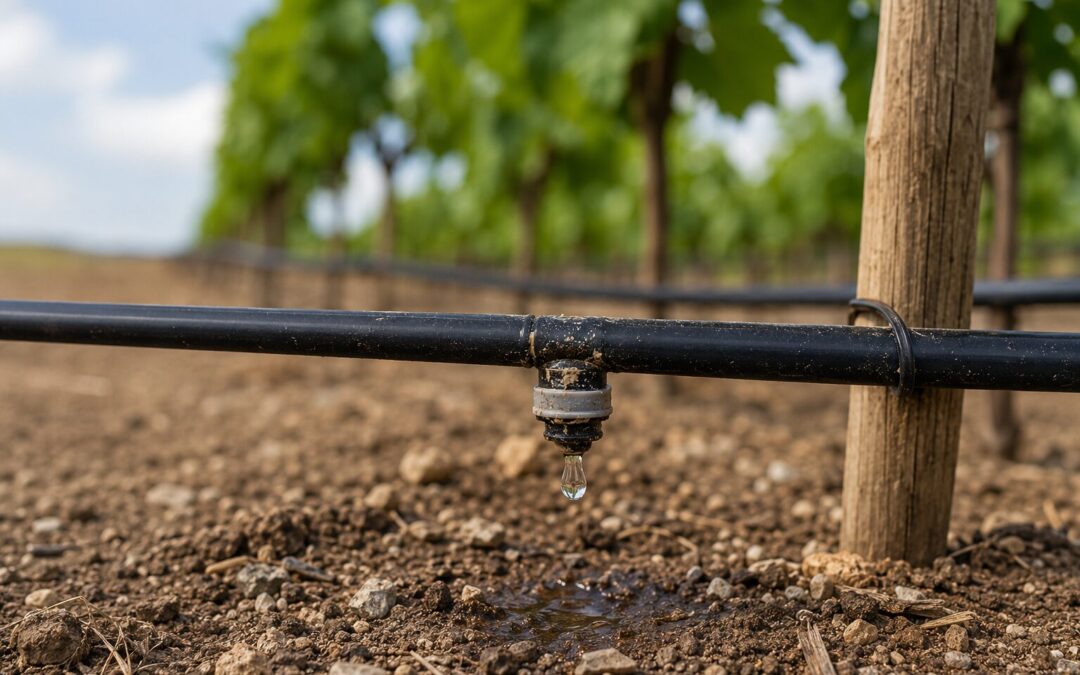
What Drip Emitters Clogging Can Tell You
When growers notice drip emitters clogging, the problem may appear limited to one plant, one row, or one section of the field. However, clogged emitters can also signal a larger issue within the irrigation system.
Sediment, mineral deposits, and biological growth can gradually restrict water flow. Because the change often happens slowly, plants may receive less water long before an emitter becomes completely blocked.
Understanding what causes clogged emitters and how to recognize the early signs can help growers address the problem before it affects crop health or irrigation uniformity.
What Causes Drip Emitters to Clog?
Most emitter clogs are caused by physical debris, mineral buildup, or biological material.
Physical Debris
Sand, soil, rust, pipe fragments, and other small particles can enter irrigation lines and become trapped inside an emitter.
Filters are designed to remove this material, but debris may still move through the system when:
-
The filter is damaged
-
The filter screen is too coarse
-
The filter is not cleaned regularly
-
Sediment builds up inside the mainline or laterals
-
Lines are not flushed often enough
Even a small amount of debris can restrict the narrow passageways inside a drip emitter.
Mineral Buildup
Water containing high levels of calcium, magnesium, iron, or other dissolved minerals can leave deposits inside irrigation components.
As water moves through the system, these minerals may collect inside emitters and slowly reduce the opening. This type of clogging may be especially common in areas with hard water or high mineral concentrations.
Mineral clogs can be difficult to see during a basic visual inspection because the buildup often occurs inside the emitter.
Biological Growth
Algae, bacteria, and other organic material can also restrict water movement.
Biological growth may form a slimy layer inside tubing, filters and emitters. This material can trap additional debris and create increasingly severe restrictions over time.
Warm temperatures, standing water, and nutrient-rich water sources can contribute to biological growth within the system.
Signs of Partially Clogged Emitters
A completely blocked emitter is usually easy to identify. A partially clogged emitter can be much harder to recognize.
Possible signs include:
-
Uneven plant growth
-
Dry areas near certain plants
-
Smaller wetting patterns
-
Reduced flow from some emitters
-
Longer irrigation times needed to achieve the same result
-
Differences between the beginning and end of a drip line
-
Gradual changes in total system flow
A partially clogged emitter may still release water, but not at the rate the irrigation system was designed to deliver.
This can create uneven watering across a field, especially when multiple emitters are affected at the same time.
Clogged Emitters or Low Pressure?
Clogging and low pressure can produce similar symptoms.
Both problems may cause weak emitter output, small wetting patterns, and uneven water delivery. However, the source of the problem is different.
Clogging restricts water at the emitter or within the line. Low pressure affects the system’s ability to move water throughout the irrigation zone.
Low pressure may be caused by:
-
Pump performance problems
-
A partially closed valve
-
A clogged filter
-
A leak or broken pipe
-
Too many zones operating at once
-
Restrictions elsewhere in the system
Checking pressure at several points can help determine whether the issue is limited to individual emitters or affecting the entire system.
Why Checking One Emitter May Not Be Enough
Inspecting one emitter can provide useful information, but it may not reveal what is happening across the entire irrigation zone.
The emitter you check may be operating normally while other emitters are partially restricted. In other cases, a single clogged emitter may not represent the condition of the rest of the system.
Growers should consider checking emitters:
-
Near the beginning of the line
-
In the middle of the line
-
At the end of the line
-
In areas showing plant stress
-
Across several laterals or blocks
Comparing multiple locations can help identify patterns that would otherwise be missed.
How to Find the Source of the Problem
Start by checking the most common points of restriction.
Inspect the filters for damage, sediment, or biological material. Clean or replace filter components according to the manufacturer’s recommendations.
Next, flush the mainlines and laterals. Flushing can remove loose sediment, organic material, and other debris that has collected inside the system.
Growers should also check system pressure and compare emitter output in several locations.
When mineral buildup or biological growth is suspected, consult an irrigation professional before applying any chemical treatment. The correct treatment will depend on water quality, irrigation materials, and the type of buildup present.
How AgriLynk Helps Identify Changes in Water Delivery
Visual inspections are important, but they only show what is happening at the locations being checked.
AgriLynk flow monitoring provides another layer of visibility by showing how much water is moving through the irrigation system. If overall water delivery begins to change, growers can investigate the system before the cause becomes obvious in the field.
A reduction in flow may point to clogged filters, restricted lines, or partially clogged emitters. An unexpected increase may indicate a leak, broken pipe, or other system problem.
Flow monitoring does not replace regular maintenance or professional irrigation inspections. It helps growers recognize that something has changed and gives them a reason to investigate sooner.
Catch Emitter Problems Before They Spread
Emitter problems are not always obvious during a field inspection. A system may continue running even while individual plants or entire sections receive less water than expected.
Regularly inspecting filters, flushing lines, and comparing emitter output can help growers find restrictions before they become more severe.
Monitoring changes in overall water delivery can also provide an early warning. When growers can see that system performance has changed, they are better equipped to determine whether drip emitters are clogging or another irrigation issue needs attention.