
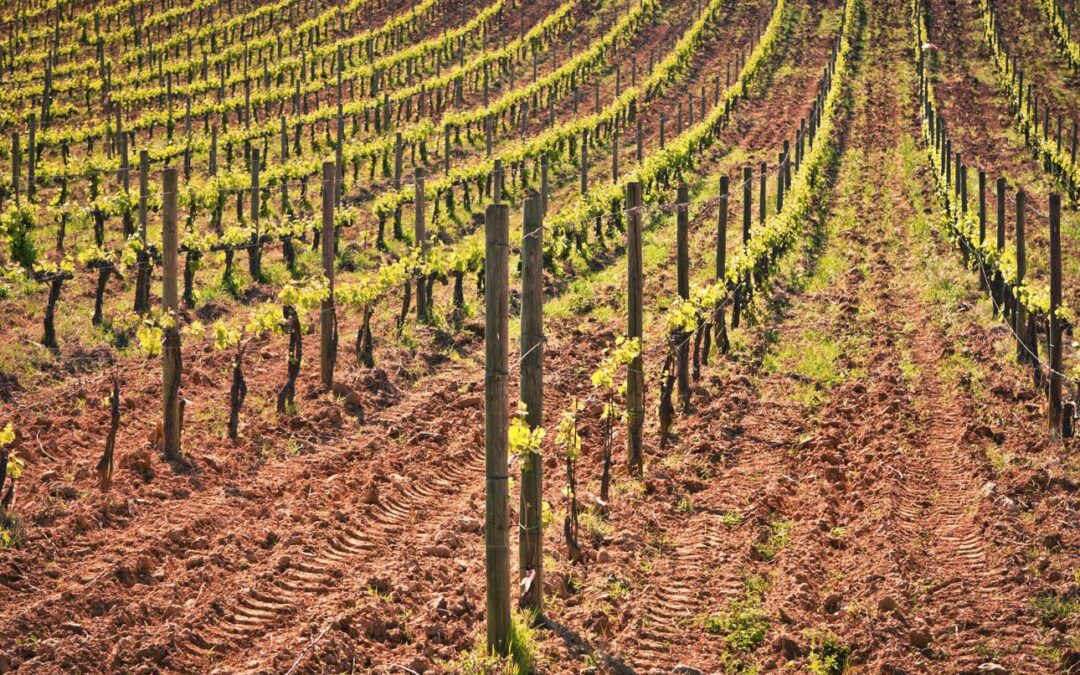
When Uniform Fields Aren’t Really Uniform
Farms rarely behave as a uniform system.
You can stand at the edge of a field, and everything may look consistent. The crop looks healthy. The surface appears dry in some places and darker in others. Maybe the irrigation schedule has worked for years, and the assumption becomes simple: if one block needs water, the next one probably does too.
But fields have a way of reminding us they do not always follow assumptions.
The Hidden Differences Beneath the Surface
One of the challenges with treating every block the same is that variability often exists where it cannot easily be seen.
A sandy section may drain quickly and dry out faster. A heavier clay area might retain moisture longer. Small elevation changes can influence the movement of water through the soil profile. Even neighboring blocks planted with the same crop can behave differently beneath the surface.
From above, they may appear identical. Below the surface, they may be telling a completely different story. This becomes especially important because irrigation decisions are not really made at the surface level. They are made in the root zone.
Root Zone Differences Change Irrigation Timing Decisions
Roots are not always developing the same way from one area to another. Some plants may be pulling moisture deeper in the profile while others remain more shallow. Root activity can vary with soil structure, crop maturity, previous irrigation practices, compaction, or localized conditions.
When every block receives the same treatment, there is a risk that some areas are being watered before they actually need it, while others may already be experiencing stress. Precision irrigation decisions become difficult when neighboring areas of a field are assumed to behave the same way.
The challenge is that these differences are often gradual. It usually is not one major mistake. It becomes a series of smaller decisions repeated over time.
Environmental Variability Creates Moving Targets
Even if two blocks started the season similarly, environmental conditions can quickly change the situation. Temperature differences, wind exposure, shade patterns, crop canopy development, and localized rainfall events can all influence how quickly moisture leaves the soil.
That means irrigation decisions that worked perfectly last week may not be as effective next week.
This is where many growers begin relying on experience and instinct, because they know every area of the field behaves differently. The difficulty is that variability becomes harder to manage as operations grow larger.
How AgriLynk Helps
Precision irrigation decisions become easier when visibility improves.
AgriLynk uses multi-depth soil tension monitoring to help growers understand what is happening throughout the root zone before, during, and after irrigation events. Instead of assuming neighboring blocks are behaving the same way, growers can see where moisture is actually moving and how different areas respond.
The goal is not to complicate irrigation decisions. It is to reduce uncertainty.
When start and stop decisions are based on actual field conditions rather than assumptions, growers can better adapt to differences in soil, root activity, and changing environmental conditions.
Final Thought
Agriculture has always involved variability.
The question is not whether differences exist between blocks. They always will.
The question becomes: how much are those differences influencing decisions without us realizing it?