
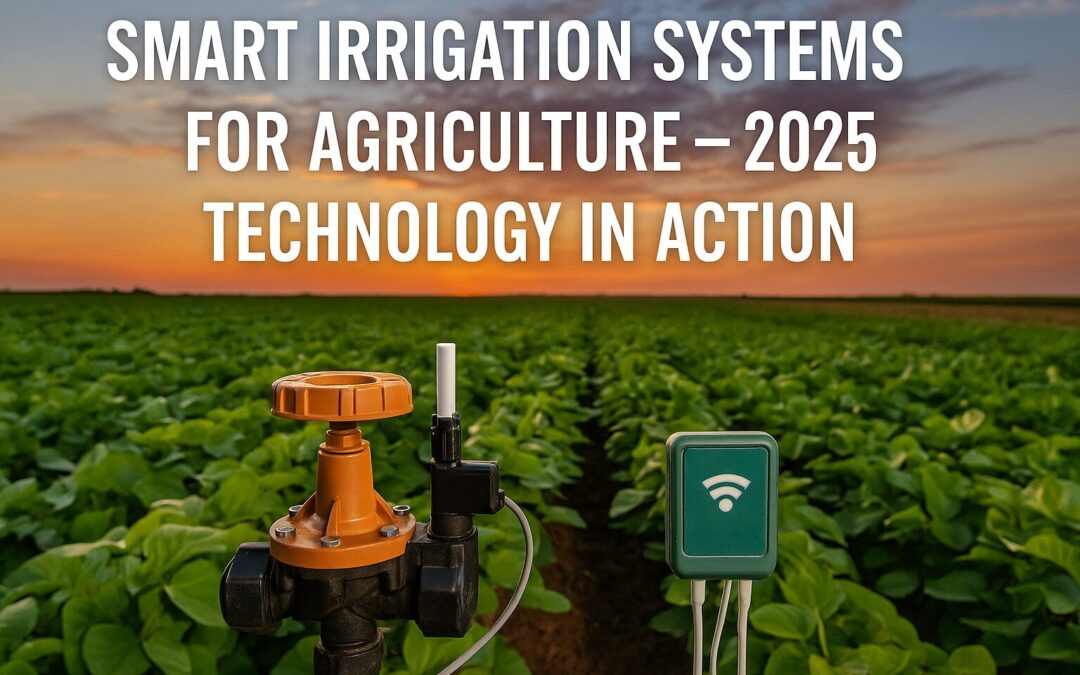
In the world of agriculture, timing and precision are everything. As climate unpredictability increases and water resources tighten, farmers are turning to smarter tools to help them do more with less. Enter smart irrigation systems for agriculture—a technology that’s no longer optional but essential.
These systems are helping farms make informed, data-backed decisions about when and how much to irrigate, leading to healthier crops, improved yields, and significant resource savings. Let’s break down what’s driving this shift and why 2025 is shaping up to be a breakout year for smart irrigation in farming.
What Is a Smart Irrigation System?
A smart irrigation system uses real-time environmental data—like soil moisture, temperature, and weather forecasts—to automatically manage and optimize watering schedules. The goal is to apply just the right amount of water at just the right time.
These systems often include:
-
Soil moisture sensors for accurate, depth-based monitoring
-
Remote valve controls for manual or automated irrigation
-
Data dashboards that track trends and alert users when adjustments are needed
For farmers, this means fewer guesswork decisions, better plant health, and reduced water waste.
Why Agriculture Needs Smart Irrigation Now
1. Water Is Scarce—and Expensive
Many growers are operating under intense pressure to cut water use without sacrificing yield. Smart irrigation systems help identify overwatering and ensure plants get only what they need.
2. Labor Shortages
With fewer hands in the field, automation becomes a lifeline. Remote irrigation control reduces the need to physically check valves or probe soil moisture manually, saving countless labor hours each week.
3. Crop Sensitivity
Different crops have different water requirements—especially during bloom, fruiting, or harvest stages. Smart systems allow for zone-specific irrigation, tailored to each crop’s growth cycle.
Smart Irrigation vs. Traditional Irrigation: A Side-by-Side Look
Traditional irrigation relies heavily on fixed schedules, visual checks, and experience. While many farmers are incredibly skilled at reading their fields, this method has limitations—especially under changing weather, labor shortages, and crop rotations.
| Feature | Traditional Irrigation | Smart Irrigation Systems |
|---|---|---|
| Water scheduling | Manual, fixed | Real-time, based on soil data |
| Labor demands | High (field checks, manual adjustments) | Low (automated alerts and controls) |
| Risk of over/under-watering | High | Minimal, with tension-based control |
| Adaptability to weather | Low | High (data-driven and dynamic) |
| Multi-zone/crop control | Difficult | Easy, scalable, sensor-specific |
ROI and Payback: What Can Farmers Expect?
One of the most common questions we get: “How quickly will this system pay for itself?”
Let’s break it down.
-
Water savings: Most AgriLynk users report 20–30% reductions in water use. In California, that can mean saving hundreds to thousands of dollars per field per year.
-
Labor efficiency: Fewer hours spent probing soil, adjusting valves, and troubleshooting systems equals lower operational costs.
-
Crop health and yield: Avoiding under- and over-watering reduces crop loss and boosts overall quality.
For many farms, the system pays for itself within 1–2 seasons—sometimes faster when integrated across multiple zones.
Smart Irrigation FAQ (Based on Real Customer Questions)
Q: How many sensors do I need per field?
We recommend three: shallow, mid, and deep within your root zone. This gives a full profile of moisture movement and depth penetration.
Q: How far does one sensor “cover”?
Each sensor reads the soil it’s in contact with. It’s not like a Wi-Fi signal. Placement within the wetting zone of your irrigation pattern is key.
Q: What kind of crops does AgriLynk work best for?
AgriLynk works across all crop types—from row crops and orchards to high-value floriculture. The system is adaptable to any irrigation method: drip, flood, or overhead.
Q: What happens if the system loses connection or power?
We designed AgriLynk to be field-hardened. With solar and backup power, plus on-device data caching, your system stays resilient even in rough conditions.
How AgriLynk Helps Farmers Work Smarter
AgriLynk was designed from the ground up by farmers—for farmers. It’s more than a monitoring tool—it’s a decision-making platform built to tackle the daily challenges of managing irrigation across complex operations.
Here’s what sets AgriLynk apart:
-
3-point soil moisture sensing: Know what’s happening at the top, middle, and bottom of your root zone—not just a single data point.
-
Remote and automated valve control: Turn valves on/off manually or based on your own set thresholds—no more irrigation guesswork.
-
Precision scheduling: Set irrigation routines that only run when soil conditions demand it. Your water schedule adapts to real plant needs, not arbitrary timing.
-
Cloud-based dashboards and alerts: Stay connected from anywhere. Whether you’re managing 5 stations or 500, your fields are always in view.
Proven Results
Farms using AgriLynk have reported up to 30% reduction in water usage while maintaining or improving crop yields. In some cases, growers avoided full system upgrades by using AgriLynk’s insights to optimize what they already had.
Ready to Modernize Your Irrigation?
Whether you manage vineyards, orchards, floriculture, or row crops, smart irrigation systems for agriculture can unlock new levels of efficiency, sustainability, and peace of mind. And if you’re ready to explore how AgriLynk can support your goals, we’d love to show you what’s possible.
Feel free to Contact Us or reach out to our team at (760) 723-1529 to talk to one of our friendly, Souther California-based staff on what smart irrigation can look like on your farm.