
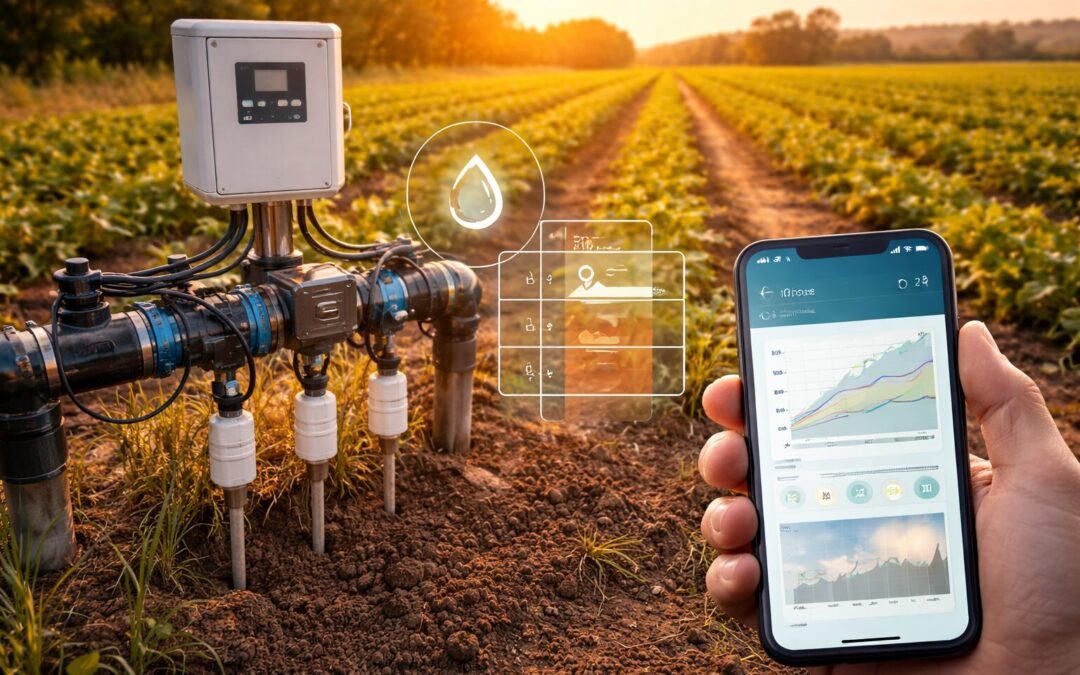
Smart farming isn’t about turning your operation into a science project. It’s about something simpler and way more useful: farmer digital empowerment; getting real, actionable field information into your hands fast enough to do something about it. If you’ve ever driven out “just to check” a tank, pump, or valve, watered by timer and hoped it was right, found a leak when the damage was already done, or lost sleep because you couldn’t see what was happening when you weren’t there, then you already understand why empowerment matters. At AgriLynk, we think the goal is straightforward: measure what matters, get alerted when it matters, and control what you can remotely. That’s how operations move from manual routines to smarter, calmer, more consistent management.
This guide walks through the real-world path most farms take, what usually goes wrong, and how to build a system that helps you farm better instead of adding another chore.
What “Farmer Digital Empowerment” Really Means
Farmer digital empowerment is when you can confidently answer questions like:
-
“Is my irrigation actually reaching the root zone?”
-
“Did that rain help, or did it just make the leaves wet?”
-
“Is my well recovering properly, or am I slowly heading toward trouble?”
-
“Are my irrigation valves doing what I think they’re doing?”
-
“Is my stock water safe right now without a drive-by?”
And you can answer those questions without guessing and without physically being everywhere.
The shift is less about fancy dashboards and more about fast visibility plus real control:
-
Visibility means reliable monitoring and meaningful alerts
-
Control means remote actions and automation that follows real conditions, not just a calendar
That’s what turns reactive firefighting into proactive management.
The Transformation Path: Manual to Visible to Controlled to Automated
Most farms don’t jump from “timers and truck rolls” to fully automated systems overnight. The best transitions happen in steps.
1) The Manual Baseline: Timers, Rounds, and Gut-Feel Adjustments
Manual operations can work. They’ve worked for generations. But they carry hidden costs:
-
Labor waste: routine checks eat hours that could go to higher-value work
-
Water waste: timers don’t know if the soil is already wet, or if the wind changed distribution, or if the crop is pulling harder this week
-
Late discovery: leaks, pressure problems, stuck valves, and pump faults often show up after they’ve caused damage
-
Scaling pain: the bigger you get, the more your system depends on people driving around
The problem isn’t the farmer. It’s that the farm can’t talk to you.
2) The First Big Upgrade: Visibility Through Measurement
Empowerment starts the moment you stop asking “What do I think is happening?” and start asking “What’s happening right now?” For irrigation, one of the biggest upgrades is switching to tension-based soil moisture monitoring (how hard the plant must work to pull water), not just “is water present.”
AgriLynk field stations commonly monitor three depths, a practical profile like 8″, 16″, and 24″, so you can see:
-
what’s happening near the surface
-
what’s happening in the active root zone
-
whether you’re pushing past where roots can use it
That depth profile is the difference between “I irrigated” and “I irrigated effectively.”
Visibility also expands beyond the field:
-
pressure monitoring to confirm irrigation is actually on and operating correctly
-
well depth and recovery monitoring (where applicable)
-
reservoir and tank level monitoring
-
flow and other operational signals depending on your setup
3) Control: Remote Actions When Minutes Matter
Once you can see what’s happening, the next step is control.
AgriLynk is built around wireless real-time data and controls. That means you’re not just collecting information; you can act on it.
Remote valve control is a classic example. Instead of “drive out and fix it,” you can respond from wherever you are, especially during weather swings, equipment faults, or peak demand. Systems can even monitor if a valve has been open too long… or didn’t open when it was supposed to.
4) Automation: Let Sensors Prevent Overwatering and Underwatering
This is where empowerment really pays off.
Timer schedules are fine as a backup, but they’re blind. A smarter approach is pairing schedules with sensor thresholds so you get the best of both:
-
schedule prevents underwatering (worst-case safety net)
-
sensor thresholds prevent overwatering (stop when the soil reaches your target)
AgriLynk supports irrigation automation using upper and lower soil sensor thresholds (start and stop rules) as part of automatic remote valve control.
That means your irrigation responds to what your crop is experiencing, not what the calendar says.
The Barriers to Digital Adoption (and How to Beat Them)
Barrier 1: “Ag tech is expensive”
It can be, especially when it’s built for enterprise budgets.
The better approach is modular: start with the zone that hurts the most, prove value, then expand.
AgriLynk pricing is structured as hardware plus annual subscriptions. For example, the AgriLynk Standard Subscription is $75 per year per station and complete systems start at under $1000.
Barrier 2: “This looks complicated”
If it takes a data analyst to irrigate, it’s not empowerment.
Empowerment means the system answers real questions fast:
-
Am I dry where it matters?
-
Did my irrigation reach depth?
-
Is pressure stable?
-
Do I need to act now?
That’s why AgriLynk messaging leans on practical outcomes: optimize productivity, improve efficiency, act on real-time data.
Barrier 3: “My farm doesn’t have Wi-Fi everywhere”
Most farms don’t, and they shouldn’t have to build a telecom network just to irrigate.
AgriLynk systems are designed for real farm conditions, including remote blocks where Wi-Fi isn’t realistic. Instead, LoRa is used to ensure strong, steady connections where wifi isn’t practical.
Barrier 4: “Support is a nightmare”
In agriculture, when something breaks, you don’t have time for ticket queues.
Our internal sales and support process emphasizes getting people to the right person fast, focusing first on irrigation outcomes while being ready to match other monitoring needs (wells, reservoirs, temperature, and more). AgriLynk staff are real people, based in the US. Most of us are at our manufacturing facility in Murietta, California. When you call us, a real person answers. And when you have a tech problem, a real engineer will help you solve it. And that chat help, over on the lower right of this page? That’s a real person too.
How to Start: A Simple Build Plan That Actually Works
Step 1: Pick your biggest pain point (not your biggest dream)
Start where the pain is measurable:
-
your most variable field
-
your most expensive crop
-
your hardest-to-reach tank
-
your most failure-prone valve, pump, or zone
Prove value there first.
Step 2: Monitor first, automate second
Run monitoring long enough to learn what “normal” looks like:
-
how fast your soil dries
-
how long it takes water to move from shallow to deep sensors
-
whether your irrigation is consistent by pressure
Then set automation rules based on reality, not guesswork.
Step 3: Use alerts like a scalpel, not a firehose
Alerts should mean something.
Good alert strategy:
-
urgent = immediate (overflow, fault/no-flow, critical low tank)
-
non-urgent = scheduled digest (soil trending dry, maintenance flags)
This reduces alert fatigue and keeps the system trustworthy.
What Success Looks Like
If you do this right, you’ll see wins in three buckets:
-
Resource efficiency
Less wasted water and pumping, not by starving the crop, but by eliminating waste. -
Labor leverage
Fewer routine drive-bys. Fewer emergency surprises. More time on high-value management. -
Decision confidence
This one is underrated: being able to leave the farm for a day (or a weekend) without feeling like you’re gambling.
Where AgriLynk Fits
AgriLynk is an AgTech platform built around wireless real-time data and control, designed to help farmers make critical decisions using real-time information.
The core use case most people start with is irrigation:
-
tension-based soil moisture monitoring (often 3 depths)
-
pressure monitoring to confirm operation
-
remote valve control and automation via thresholds (where configured)
And the same platform can expand into other critical monitoring depending on the operation (wells, reservoirs, temperature-based use cases, and more).
Wrap-up: Farmer Digital Empowerment That Pays Twice
When you move from manual to smart, you don’t just “add tech.” You reduce wasted inputs, protect yield by keeping the crop in a healthier zone, and reclaim time and attention, which are always the real bottlenecks.
That is the real promise of farmer digital empowerment. It’s the shift from hoping you’re right to knowing what’s happening and having the ability to act before small problems turn into expensive ones.