
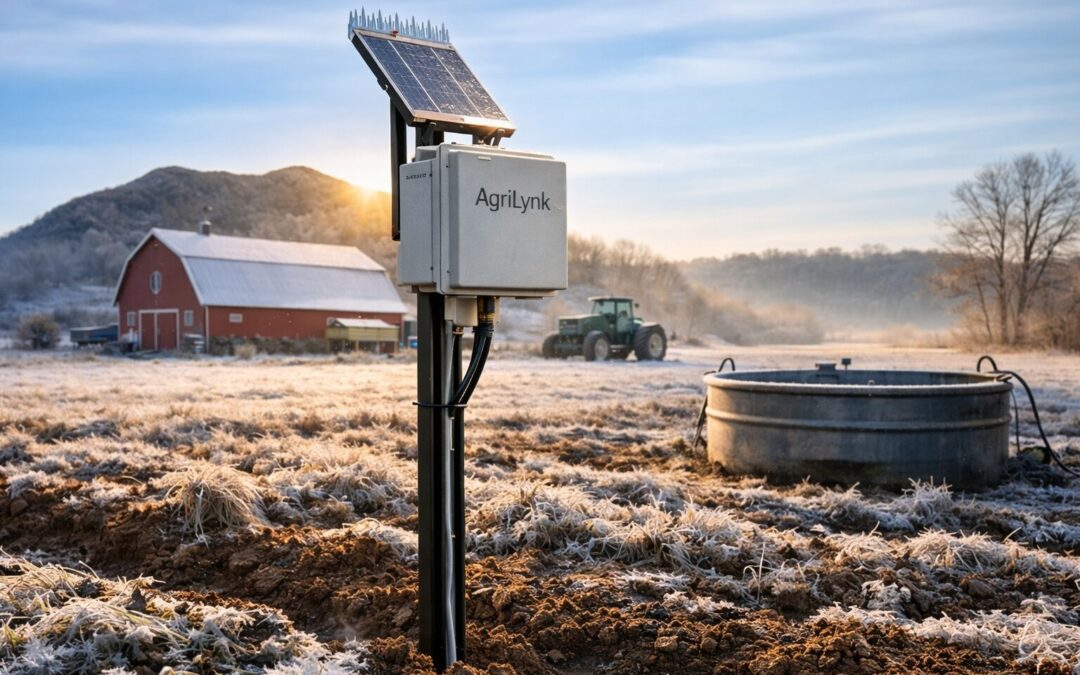
When winter hits, a lot of farms mentally shut down. Fields look quiet. Crops aren’t growing. Irrigation schedules slow down. It feels like an off-season. That assumption is exactly why some growers are scrambling in spring, while others, that know the winter farm secrets the pros actually use, are already ahead.
Winter isn’t downtime. It’s intelligence season.
The best operators use winter to monitor systems, collect data, uncover hidden problems, and prepare for the most expensive months of the year. They don’t wait for plants to start screaming before they pay attention. They listen when things are quiet.
What Is “Winter Farm Intelligence”?
Winter farm intelligence isn’t about surviving cold weather. It’s about using winter to:
-
Catch infrastructure problems early
-
Understand soil behavior without crop pressure
-
Establish data baselines for spring irrigation
-
Reduce labor, water waste, and emergency repairs
In other words, winter is when smart farms stop guessing and start knowing.
Why Winter Monitoring Matters More Than You Think
There’s a common myth in agriculture:
“Nothing’s growing, so nothing needs watching.”
That’s like saying you don’t need to check your bank account because you’re not spending money today. Your farm infrastructure never stops working, especially in winter. In fact, cold weather puts more stress on systems:
-
Freeze–thaw cycles weaken pipes and fittings
-
Cold water changes pump performance
-
Reduced use hides declining well capacity
-
Tanks, valves, and sensors are more likely to fail quietly
Winter is when systems reveal their true condition.
The problem? Most winter failures stay invisible until they’re expensive. A small leak in December becomes a washed-out field in March. A struggling well in January becomes a dead pump in May. Winter monitoring isn’t paranoia. It’s preventative math.
Soil Doesn’t Go Silent in Winter
Your Soil Is Still Talking. Are You Listening?
Even when crops slow down, your soil is still doing important things:
-
Water is moving (or not moving)
-
Drainage issues are forming
-
Compaction patterns are showing up
-
Moisture is being retained, or lost
This is where soil tension monitoring shines.
Unlike basic moisture sensors that just say “there’s water here,” tension-based sensors measure how hard plants must work to pull water from the soil. That distinction matters even more in winter, when cold soil changes how water behaves.
What Winter Soil Data Tells You
Winter tension data helps growers:
-
Identify drainage problems before spring planting
-
See where water pools or runs off
-
Establish baseline moisture profiles
-
Detect underground leaks through abnormal moisture spikes
Using multi-depth sensing (commonly 8″, 16″, and 24″) gives a clear picture of how water moves through the soil profile. Surface moisture from rain might look fine, but deeper sensors reveal whether water is actually reaching the root zone or disappearing. That insight shapes everything from spring irrigation timing to crop planning.
Water Loss Doesn’t Take a Winter Break
Water behaves differently in winter, but it still costs money. A common winter scenario looks like this:
A small crack forms in an irrigation line during a freeze. It doesn’t burst. It just leaks slowly. No one notices because irrigation isn’t running full-time.
Three months later:
-
Thousands of gallons are gone
-
Pressure is worse
-
The repair now requires digging
-
The bill is no longer small
Winter monitoring catches problems when they’re cheap.
Pressure sensors, flow monitoring, and soil data work together to reveal:
-
Unexpected pressure drops
-
Flow when nothing should be running
-
Moisture spikes in dry zones
-
Declining well performance
Monitoring costs pennies per day. Repairs cost thousands.
Why Winter Is Peak Failure Season for Infrastructure
If farm infrastructure had a personality, winter is when it shows it.
Stock Tanks
They freeze. They crack. Float valves stick. Lines burst. And you usually find out after livestock have been without water.
Electric Fences
Cold weather lowers voltage, cracks insulators, and makes dead vegetation conductive. Escaped livestock rarely respect business hours.
Wells and Pumps
Cold water is denser. Pumps work harder. Reduced use hides performance decline, until demand spikes in spring.
The difference between reactive farms and proactive ones?
The pros are monitoring all of this remotely.
They get alerts when:
-
Tank levels drop
-
Fence voltage falls
-
Pump pressure changes
-
Temperatures threaten equipment
Problems are investigated early, not discovered too late.
Solving the “2 AM Problem”
Every farmer knows this truth:
The worst problems happen at night, on weekends, or during holidays.
Traditional winter management usually means one of three bad options:
-
Driving around in the cold constantly
-
Discovering failures too late
-
Lying awake wondering if everything’s okay
None of those scale.
Remote monitoring with intelligent alerts changes the game.
Modern systems can send email or SMS alerts when conditions cross thresholds—so you only get notified when something actually matters. Even better? These systems work without Wi-Fi, using cellular connectivity to reach remote fields, tanks, and wells. Because infrastructure failures love places with terrible internet.
Winter Data Is Spring’s Competitive Advantage
Winter is when great farms quietly build an edge. While others are in maintenance mode, data-driven operations are learning:
-
How different fields respond to moisture
-
Where infrastructure is weakest
-
What “normal” really looks like
-
How weather patterns affect their operation
This matters when spring arrives and decisions stack up fast. Instead of guessing, these farms rely on months of real data:
-
When to irrigate
-
How much water to apply
-
Where problems will appear first
Year one builds understanding. Year two reveals patterns. Year three enables prediction. That’s how farms move from tradition-based decisions to data-backed confidence.
Automation That Pays for Itself
Let’s talk economics. Traditional irrigation management costs add up through:
-
Labor for manual checks
-
Water waste from over-irrigation
-
Yield loss from stress
-
Infrastructure damage from unnoticed failures
Sensor-driven automation flips that equation. Systems that irrigate based on soil tension, not timers, deliver:
-
20–30% water savings
-
Reduced labor hours
-
Healthier crops
-
Fewer emergency repairs
Winter is the best time to install and dial in automation. Systems are ready when stakes are highest and mistakes are most expensive.
How Smart Farms Actually Implement This
The best operators don’t monitor everything at once. They start where data creates the most value:
-
Soil moisture in high-value fields
-
Tank levels in remote pastures
-
Well performance after past failures
This modular approach keeps systems manageable and ROI clear. Platforms like AgriLynk are designed for this reality. Built on a working California farm, AgriLynk focuses on practical monitoring:
-
Tension-based soil sensing
-
Cellular connectivity
-
Real-time alerts
-
Remote valve control when needed
No overbuilt dashboards. No unnecessary complexity. Just useful data where it matters.
Starting Small (And Smart)
You don’t need a massive investment to start. A basic monitoring setup can include:
-
A cellular field station
-
Multi-depth soil tension sensors
-
Real-time alerts
-
Optional remote valve control
Annual subscriptions are often less than the cost of a single service call. Systems scale as needs grow and as confidence in the data increases.
Why Support Matters More Than Features
Ag tech has a reputation problem for a reason. Too many systems look great in demos but fail in the field, and come with support that’s slow, scripted, or nonexistent. The difference with farmer-built platforms?
Real people answer the phone.
Support teams understand soil types, freeze–thaw cycles, and real-world farming constraints. Sensors are replaceable. Systems are designed to be used, not babysat. Technology only delivers ROI if it’s actually used.
The Real Winter Advantage
Winter farm intelligence isn’t about staying busy; it’s about staying ahead. While others wait for spring to react, data-driven farms are:
-
Preventing failures
-
Learning their systems
-
Reducing stress
-
Saving water and labor
Nothing may be growing, but everything still matters. And the farms that know that truth? They’re the ones ready when the season starts.