
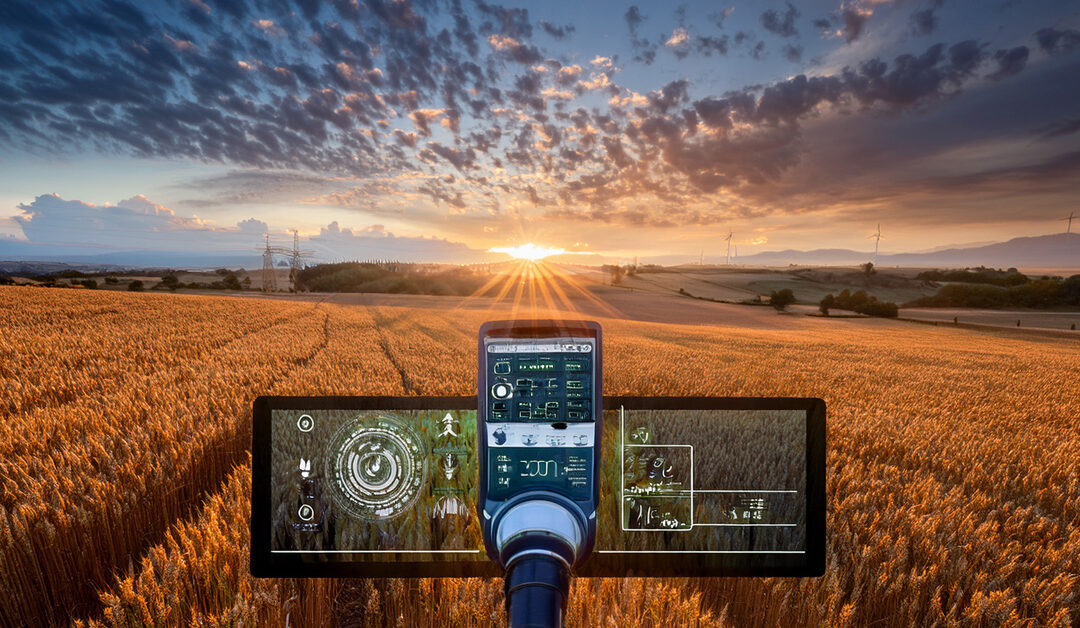
In farming, water isn’t just a utility — it’s a gamble. Too little, and you stress your crop. Too much, and you risk root damage, runoff, and wasted resources. For decades, irrigation has relied on tradition, visual cues, and a lot of guesswork. But with real-time moisture sensing, that’s finally changing — and it’s changing fast.
The Problem with “Scheduled” Irrigation
Most farms still irrigate on fixed schedules. Maybe it’s twice a week, or every other day, based on crop type, past experience, and a rough feel for the weather. This approach is easy — but it’s also wildly inaccurate.
Rainfall, temperature swings, humidity, and even plant maturity all affect how much water a field actually needs at any given time. Traditional schedules rarely account for this nuance. Overwatering and underwatering aren’t just common — they’re nearly guaranteed.
That’s where real-time moisture sensing steps in.
How Moisture Sensors Actually Work (Without the Jargon)
Here’s the simplest explanation: These sensors sit in your soil and measure how tightly water is “held” by soil particles — that’s called tension. Just like a plant’s roots have to “pull” water from the soil, sensors measure how hard that pull has to be. The drier the soil, the higher the tension. The wetter it is, the lower the tension.
AgriLynk’s system installs three sensors at different depths (top, middle, and bottom of the root zone) to show how deep water is penetrating. With real-time readings every 8 minutes, farmers get a clear view of how water moves through the soil — and when the plant is actually drinking.
This isn’t based on conductivity or volume alone (which can be skewed by salts and fertilizers), but actual root-accessible water, giving growers the closest thing to a direct line to the plant’s experience.
What You’re Really Measuring: Plant Stress, Not Just Soil Wetness
One of the biggest misconceptions in irrigation is thinking moisture equals access. But water can be present and still unavailable to a plant — especially in clay-rich soils or when salts are involved.
What real-time moisture sensing gives you is a live window into plant stress. By tracking how quickly tension builds after an irrigation event — and how deep that water traveled — you can fine-tune your schedule based on how your plants are actually responding.
This means you can:
-
Avoid shallow watering that doesn’t reach roots.
-
Prevent overwatering that leaches nutrients beyond root zones.
-
Time irrigation more precisely, boosting health and yields.
According to the University of California Agriculture and Natural Resources, tension-based sensors are particularly valuable for understanding available water in complex soils and when using saline irrigation sources.
How One Farm Cut Water Use by 30% — Without Hurting Yields
At Kindle Farms in Southern California, growers installed AgriLynk’s system across multiple fields. Within weeks, data revealed something surprising: they were consistently overwatering. Crops were getting more than they needed — not just wasting water, but also jeopardizing root health.
After analyzing sensor feedback, they adjusted irrigation durations and spacing. The result? A 30% reduction in water use, without a drop in yield. In fact, plant vigor improved. They also saved on electricity and fertilizer leaching.
For farms in drought-prone regions — or any place where water costs are rising — this kind of precision matters. Big time.
Next-Level Control: From Monitoring to Automated Irrigation
Monitoring is only step one. With AgriLynk, that data can trigger actions.
Using sensor-defined thresholds, the system can automatically open and close irrigation valves, ensuring each irrigation event happens only when it’s needed — and stops as soon as optimal moisture is reached. No human guesswork required.
Even better? Different thresholds can be set for each depth, so you can:
-
Start irrigating when the top layer dries out.
-
Stop irrigating when the lower layer is just full enough.
-
Avoid over-saturating and pushing water past the roots.
That’s something no off-the-shelf timer can do.
Is It Worth It? When Technology Pays Off for Small and Large Farms
A common question we hear: “Does this really make sense for a smaller farm?”
The short answer? Yes.
AgriLynk systems start at just under $1,000, and include support for multiple sensors and valve control. Even a modest 10-acre operation can save thousands per year in water, electricity, and labor — often paying back the investment in a single season.
Plus, AgriLynk isn’t just for irrigation. Farmers are using it to:
-
Monitor well levels and avoid dry pump damage.
-
Track reservoir levels and pressure in real time.
-
Keep an eye on compost temps to prevent fires.
-
Get alerts when truck doors are left open too long.
The versatility is huge — and it grows with your needs.
If you’re looking for deeper comparisons, Irrigation Today by the Irrigation Association provides ongoing research and real-world use cases of advanced moisture sensing in different crop settings.
Conclusion: You Can’t Manage What You Don’t Measure
Farming will always have variables — pests, weather, supply chains. But water? That’s something you can control. Or at least, you can measure — and that’s where control starts.
Real-time moisture sensing gives you the tools to grow smarter, not harder. More yield, less waste, and no more guesswork.
Want to see how it works on your farm? Let’s talk.